A Coruña
Spain’s official guide gives about 76 seconds of totality, with the Sun roughly 12° above the horizon at totality.
Calculate A Coruña →Plan Spain’s rare evening total eclipse with official path information, visual location comparisons, low-horizon advice, eye-safety guidance, and direct links to the exact-location calculator.
The path of totality crosses Spain from west to east. Spain’s official geographic institute says totality will be visible across almost the entire northern half of the peninsula, while the southern half sees a partial eclipse. The path includes provincial capitals from A Coruña to Palma de Mallorca, including León, Bilbao, Zaragoza and Valencia.
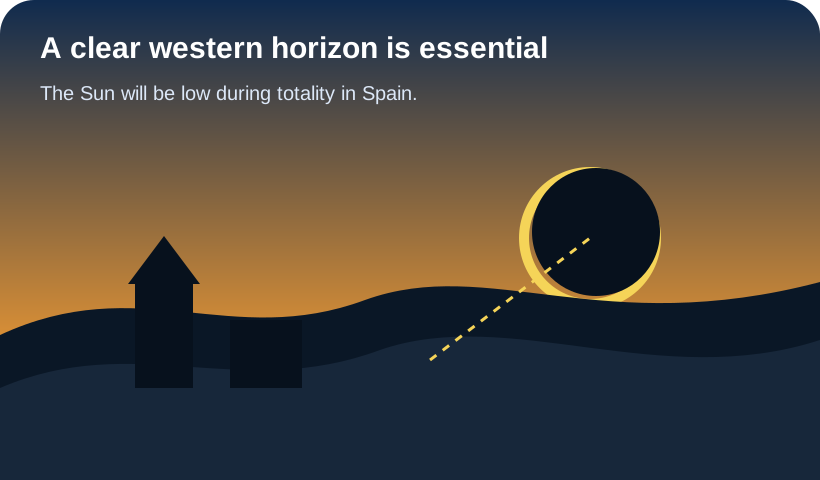
Totality occurs close to sunset. A hill, building, trees, coastal haze, or a poor western view can block the eclipse even when the coordinates are inside the path.
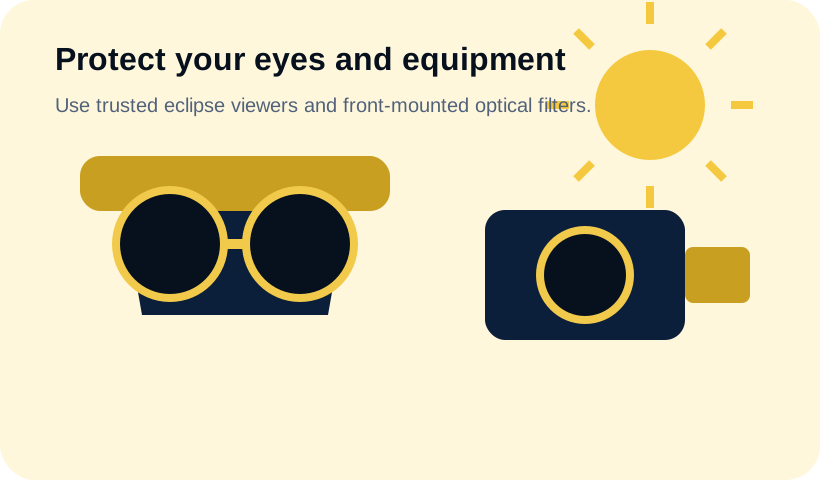
Use safe solar viewers during every partial phase. Cameras, binoculars, and telescopes require filters secured over the front of the optics.
These are not automatic recommendations or a stored visitor location. They are official-path reference points. Open any card to calculate the result for that city, then replace it with the exact hotel, field, or coordinates you plan to use.
Spain’s official guide gives about 76 seconds of totality, with the Sun roughly 12° above the horizon at totality.
Calculate A Coruña →The official guide gives about 104 seconds of totality, with the Sun roughly 8° high. The eclipse continues until around sunset.
Calculate Burgos →Bilbao is one of the provincial capitals crossed by totality and offers airport, hotel, and transport access for a flexible viewing plan.
Calculate Bilbao →Zaragoza lies in the official totality corridor and can work as a base for reaching open inland horizons after checking the forecast.
Calculate Zaragoza →Valencia is among the provincial capitals crossed by the totality path. Exact coordinates and western-horizon visibility are critical.
Calculate Valencia →The official guide says maximum eclipse occurs close to sunset, with the Sun only about 2° above the horizon.
Calculate Palma →The gold band reproduces the 2026 path across Greenland, Iceland, the North Atlantic, Spain, and a small part of Portugal. Use the calculator for your exact point because the edges of the path are narrow.
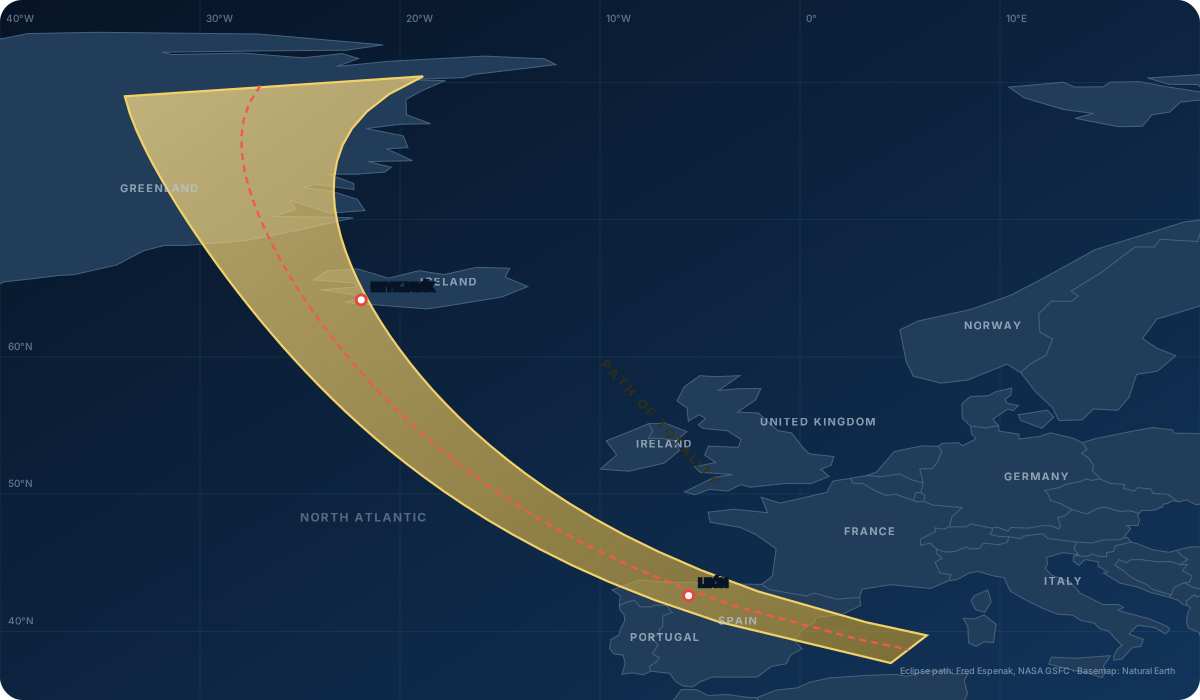
Use a city only as a starting point. Enter the final coordinates to see eclipse type, contact times, totality duration, and Sun altitude.
Visit the candidate site at the same time of day when possible. Check hills, buildings, trees, and the direction of sunset.
Use refundable accommodation and identify at least two reachable backup areas. Final cloud decisions belong close to eclipse day.
The result is calculated from the location selected by each visitor. Nothing in this guide forces Madrid or another test city.
The 2026 Perseids peak follows the eclipse overnight under a new Moon. Plan a separate dark-sky site or confirm that the eclipse location works for both events.
The guide uses official path information, while the calculator handles the visitor’s selected location.
No. Spain’s official geographic institute says almost the entire northern half of the peninsula is in totality, while the southern half sees a partial eclipse.
No. A visitor must choose a city, use device location, or enter coordinates. A city previously used while testing the calculator is not saved as the public default.
The event takes place close to sunset. In some locations, totality occurs with the Sun only a few degrees above the horizon.
No. Use safe eclipse viewers that meet the appropriate solar-viewing requirements during the partial phases. Optical equipment needs a safe front-mounted filter.
Use the path and access information now, but keep the final viewing site flexible until useful weather forecasts become available closer to 12 August.